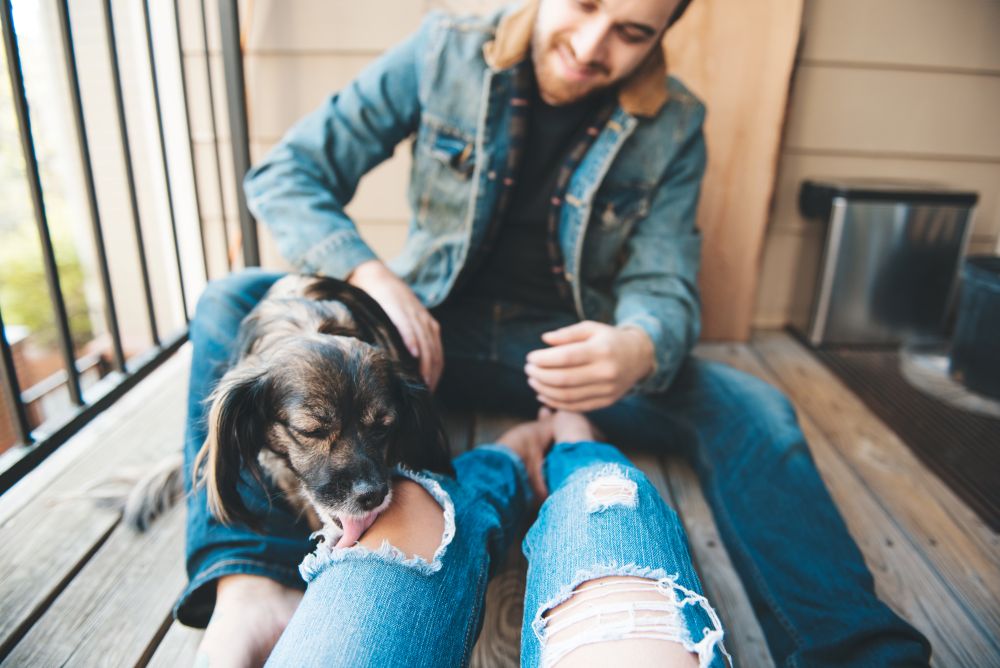
My neighbor Sarah called me one afternoon half-laughing, half-horrified. Her golden retriever, Biscuit, had developed a new obsession — every time she kicked off her shoes after work, he was there, licking her feet with alarming enthusiasm. “Is he broken?” she asked. “Or am I just particularly delicious?”
Turns out, she’s not alone. This is one of the most commonly Googled dog behavior questions in the U.S., and honestly, the answer is a lot more layered than “he just loves you.”
So if you’ve ever caught yourself wondering why does my dog like to lick my feet, buckle up — because your pup is communicating something specific, and it’s worth understanding.
Your Feet Are a Scent Encyclopedia (And Dogs Are Avid Readers)
Dogs experience the world primarily through smell. Their noses contain approximately 300 million olfactory receptors — compared to about 6 million in humans. When your dog goes after your feet, they’re essentially downloading a full report of your day.
Sweat from your feet contains compounds like lactic acid, urea, and fatty acids. To your dog, that’s not gross — it’s informative. They can detect where you’ve been, what you’ve eaten (absorbed through skin metabolites), and even shifts in your mood or health. Studies have shown dogs can identify stress hormones through scent, meaning your feet might literally be telling your dog you had a rough Tuesday.
5 Specific Reasons Dogs Lick Their Owner’s Feet
1. Salt and Natural Skin Secretions
Human feet produce more sweat glands per square inch than almost any other body part — roughly 250,000 sweat glands in a pair of feet. The salty residue is genuinely appealing to many dogs, in the same way they might lick a salt lick or seasoned food off a countertop.
2. Submission and Social Bonding
In wolf pack behavior, lower-ranking members lick the faces and bodies of dominant pack members as a gesture of deference and affection. Domestic dogs retained this instinct. Licking your feet — the lowest point of your body — can be a way of saying, “I respect and love you.”
3. Attention-Seeking That Worked Once
If you laughed, flinched, or even scolded your dog the first time they licked your feet, congratulations — you accidentally trained them. Dogs are fast learners about cause and effect. Any reaction, including a negative one, can reinforce the behavior.
4. Anxiety and Self-Soothing
Repetitive licking behavior in dogs is often a sign of stress. If your dog ramps up foot-licking during thunderstorms, when guests visit, or after a schedule disruption, it may be a self-soothing mechanism. According to the American Kennel Club, compulsive licking can sometimes indicate generalized anxiety disorder in dogs.
5. Habit and Comfort
Some dogs simply develop routines. If foot-licking happens every evening when you sit on the couch, it may have evolved into a ritual that signals wind-down time — for both of you.
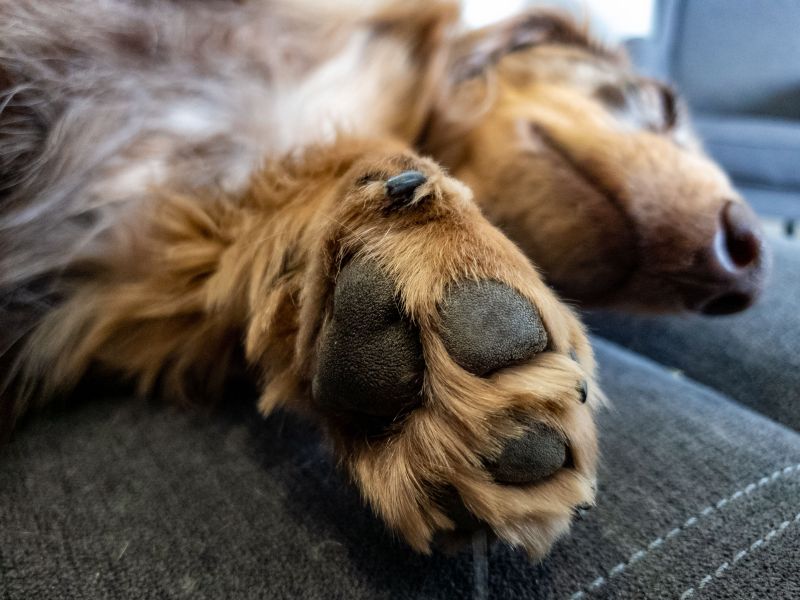
But What If It’s Your Dog’s Own Feet?
Here’s where things shift. If you’ve been wondering why does my dog keep licking his feet rather than yours, that’s a different conversation — and a more medically significant one.
Persistent self-licking on paws can signal:
- Environmental allergies — grass, mold, pollen, or household cleaning products. This is the #1 cause in the U.S., with an estimated 10–15% of dogs affected by atopic dermatitis.
- Food sensitivities — proteins like chicken or beef are common culprits.
- Yeast infections — often accompanied by a distinct corn chip-like odor (yes, that’s real, and vets call it “Frito feet”).
- Pain or injury — dogs lick wounds instinctively, so a thorn, cracked pad, or insect bite between the toes could be the cause.
- Boredom and under-stimulation — dogs who don’t get enough physical or mental exercise often redirect energy into repetitive behaviors.
If your dog’s paws look red, swollen, or have visible hair loss from licking, schedule a vet visit. This isn’t something that resolves on its own.
When Should You Actually Worry About Foot Licking?
Most foot-licking directed at you is harmless. But here’s when to take note:
- The licking is compulsive — your dog can’t be distracted away from it and does it for extended periods (10+ minutes at a stretch).
- It escalates suddenly without an obvious trigger.
- It coincides with other behavioral changes — appetite loss, hiding, or aggression.
- Your dog is licking at open cuts or wounds on your feet, which poses a genuine infection risk (dog saliva contains bacteria like Pasteurella and Capnocytophaga that can cause serious infections in immunocompromised individuals).
How to Redirect the Behavior (Without Making It Worse)
If you’re tired of the tickling:
- Ignore it completely — no reaction whatsoever. For attention-seeking lickers, this is the fastest solution.
- Redirect with a command — ask for a “sit” or “paw” and reward compliance.
- Give them something else to do — a frozen lick mat or puzzle feeder right after you come home can replace the foot-licking ritual.
- Check your schedule — if it spikes at certain times, your dog may need more exercise or mental engagement.
What doesn’t work: yelling, pulling your feet away sharply (it becomes a game), or applying deterrent sprays on your own skin.
Frequently Asked Questions
Q: Is it safe to let my dog lick my feet? A: For most healthy adults, occasional licking is low-risk. However, if you have open cuts, blisters, or a compromised immune system, it’s best to discourage it. Dog saliva contains bacteria that don’t typically affect intact skin but can cause issues through broken skin.
Q: My dog only licks my feet when I come home — is that affection? A: Very likely yes, combined with information-gathering. You’re carrying a mountain of new scents, and greeting rituals in dogs involve licking as a bonding behavior.
Q: My dog licks my feet but not my husband’s. Why? A: Foot chemistry is individual. Your specific sweat composition, the lotions or products you use, and even your microbiome all affect scent. Your dog may simply prefer your particular scent profile — or they’ve learned you react more interestingly.
Q: Why does my dog keep licking my feet even after I shower? A: Even post-shower, your skin continues to produce sweat and natural oils within minutes. Your unique scent isn’t erasable — it’s biological.
Q: If why does my dog keep licking my feet is something you’re Googling at midnight, should you call a vet? A: If it’s new, sudden, or obsessive — yes, mention it at your next visit. If it’s been a low-level quirk forever, it’s probably just your dog being your dog.
The Bottom Line
Your dog licking your feet is, in most cases, a combination of instinct, affection, habit, and curiosity. It’s not random, and it’s not broken — it’s communication. The key is knowing the difference between a quirky evening ritual and a sign that something deeper is going on, whether behaviorally or medically.
Sarah eventually got Biscuit a lick mat that he gets every evening when she comes home. He’s so focused on the peanut butter that he barely notices her feet now. “Honestly,” she told me, “I kind of miss it.”
Of course she does. That’s dog ownership in a nutshell.
Have a weird dog behavior you want explained? Drop it in the comments — we read every single one.